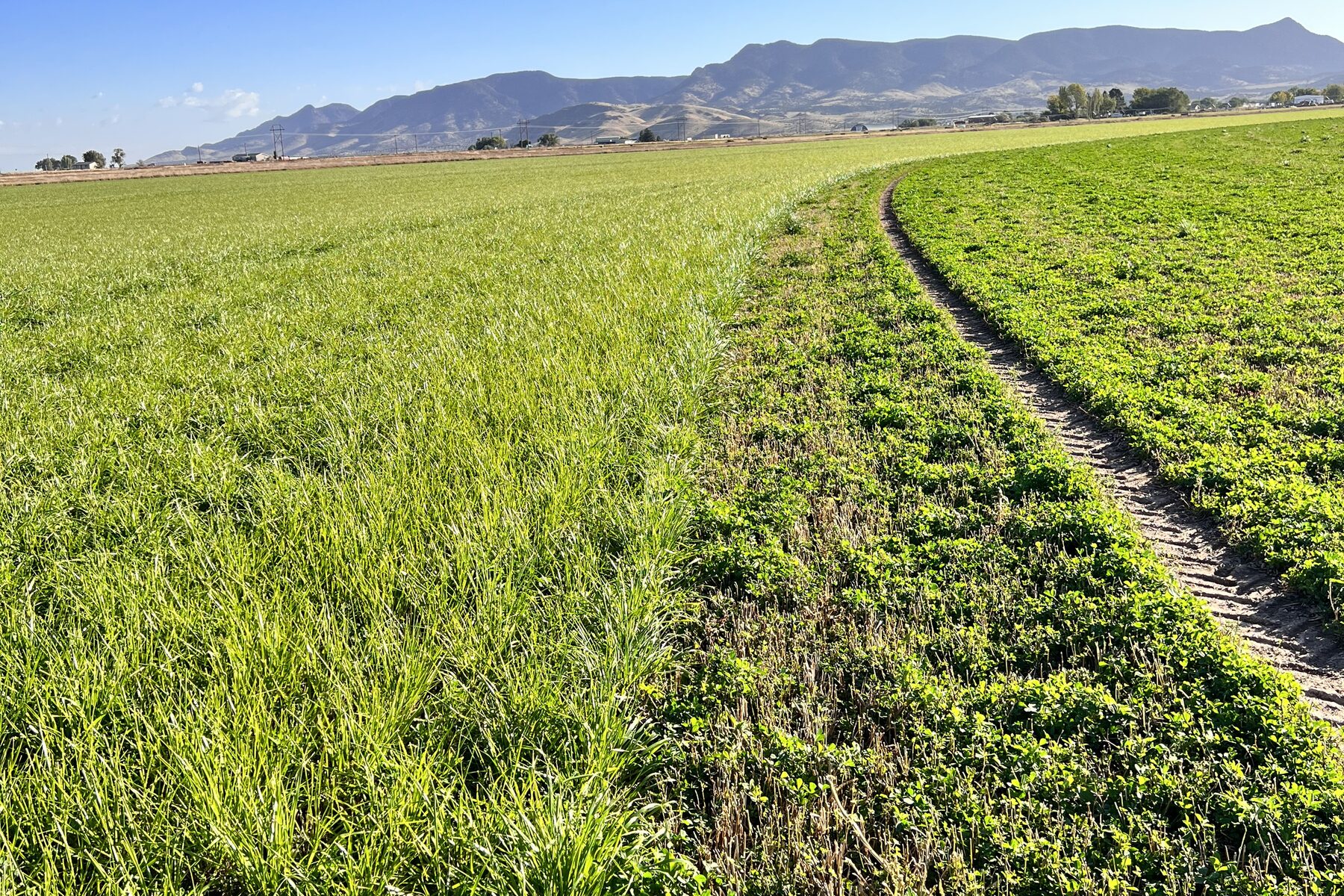
Ace-Ascent ryegrass inner-seeded on the left against a straight alfalfa stand on the right, with the Owyhees behind

Western Grass

Built right mixes

Pasture and forage mixes selected for the western environment — every component chosen to maximize milk and beef gain.

Mix philosophy

A mix is only as good as its worst component

Anyone can blend grass seed. A built right mix means every single component has a reason to be there — and has been selected for the western environment it is going into.

  • Components selected for the western environment, not a national average.
  • Every component chosen to maximize milk and beef gain.
  • Pasture and forage mixes matched to your grazing or harvest system.
  • Backed by the same people and the same standard as our corn and alfalfa.
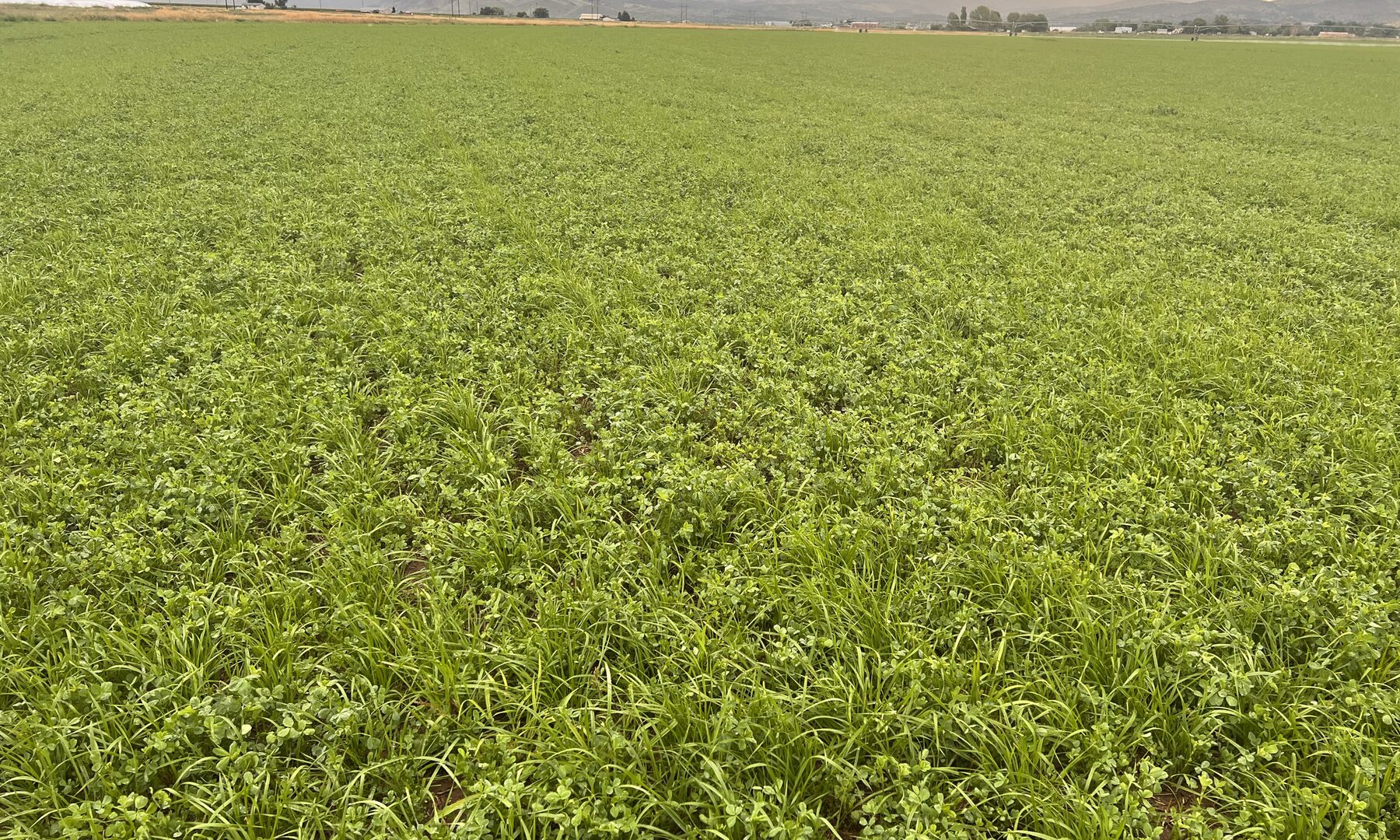
A dense Western Grass stand with clover under a hazy Idaho sunset
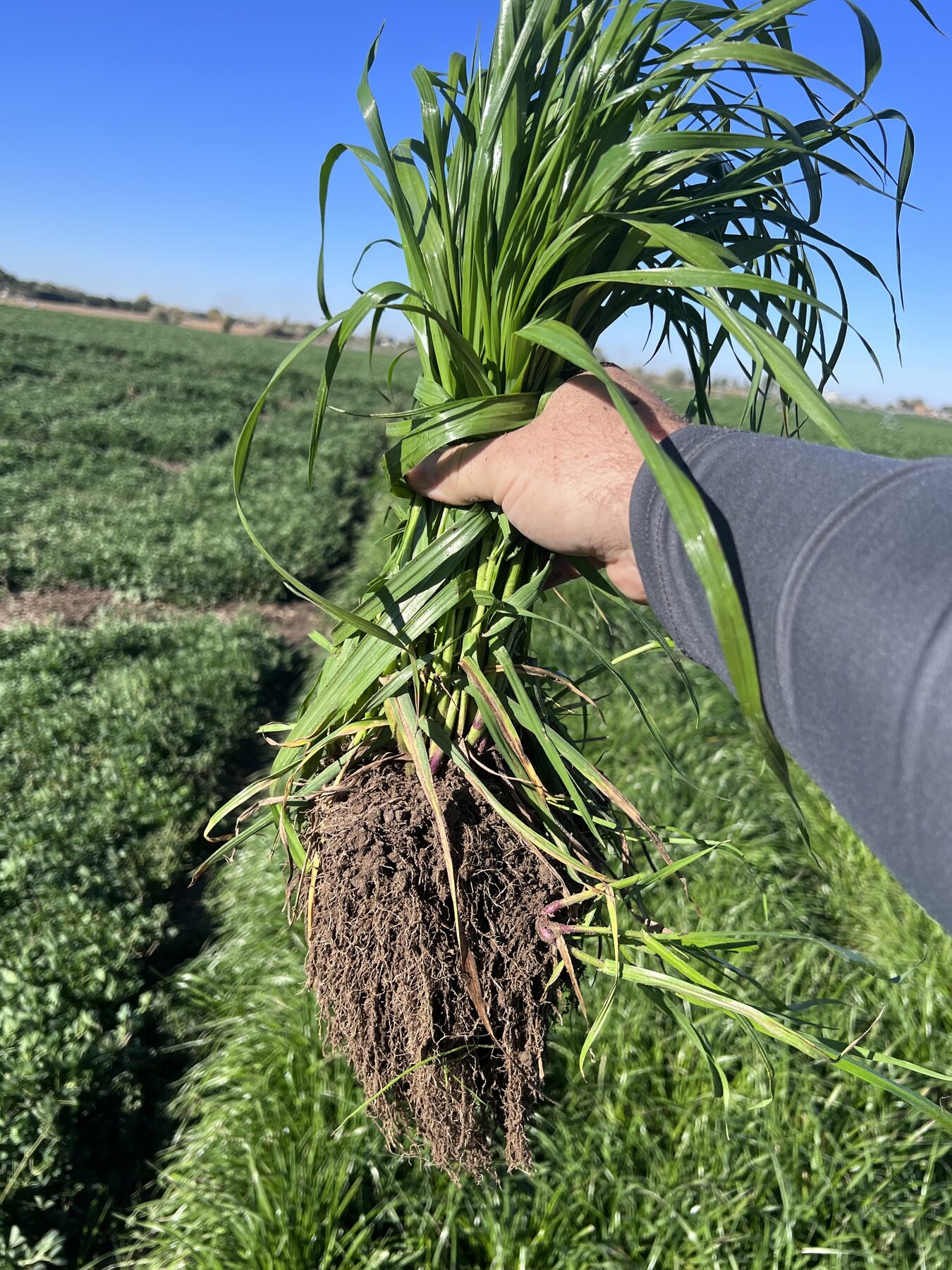
A hand holding a pulled ryegrass plant with an intact root mass and soil still attached

Why it holds

Roots

Establishment speed is easy to sell and easy to see. What carries a stand through a western season is underneath it.

Rapid establishment and winter hardiness show up in the same place — a root mass that can hold the plant through cutting, grazing pressure and an Idaho winter. It is one of the things we look at when we decide what earns a place in a mix.

The mixes

Three mixes, three jobs

Each Western Grass mix is assembled around one production goal. Components, seeding rates and harvest strategy come straight from the Western Grass program.

Ascent

Italian Ryegrass Mix

Ascent combines bi-annual medium-late maturing Italian ryegrasses to take yield and quality requirements to the next level. Known for its versatility as a monoculture or inner-seeded into alfalfa or pastures, Ascent brings high protein with high yield.

Key characteristics

  • Fast establishment
  • Biennial, bunch growth habit
  • High NDF / NDFD digestibility scores
  • High protein content
  • 3–4 cuts in the establishment year
  • High yield potential

Western Built Right

  • Italian ryegrass (tetraploid)
  • Italian ryegrass (diploid)

Planting & harvest strategy

  • Sow ¼–½″ deep into a firm seedbed
  • Full seeding rate 25–35 lbs./acre
  • Pasture / alfalfa refresh rate 12–15 lbs./acre
  • Leave 3–4″ after cutting for optimal recovery
  • Best harvested as haylage or grazing

Vantage

Dairy Mix

Vantage was built to maximize dairy output in the West. Its assembly of six high quality, high performing perennial components makes Vantage a must in any dairy ration. Ensile, hay or graze — a versatile option in the field that puts milk in the parlor.

Key characteristics

  • Rapid establishment
  • Excellent palatability
  • High forage yield
  • Improved winter hardiness
  • Meets dairy quality needs
  • Added legume component

Western Built Right

  • Perennial ryegrass
  • Soft-leaf tall fescue
  • Orchard grass
  • Meadow fescue
  • White clover
  • A small percentage of Italian ryegrass, as a nurse crop for the tender perennial seedlings

Planting & harvest strategy

  • Sow ¼–½″ deep into a firm seedbed
  • Full seeding rate 25–35 lbs./acre
  • Pasture / alfalfa refresh rate 12–15 lbs./acre
  • Leave 3–4″ after cutting for optimal recovery
  • Harvest for haylage, grazing or dry hay

Overlook

Stockman's Mix

Overlook's palatability makes this mix suitable for stock health and gain. This four-component perennial grass mix is for western producers to take for haylage, graze or dry hay. Overlook has been tested and proven in the western environment to maximize yield and quality.

Key characteristics

  • Rapid establishment
  • Excellent palatability
  • High forage yield
  • Improved winter hardiness
  • Solid disease resistance

Western Built Right

  • Perennial ryegrass
  • Soft-leaf tall fescue
  • Orchard grass
  • Italian ryegrass

Planting & harvest strategy

  • Sow ¼–½″ deep into a firm seedbed
  • Full seeding rate 25–35 lbs./acre
  • Pasture / alfalfa refresh rate 12–15 lbs./acre
  • Leave 3–4″ after cutting for optimal recovery
  • Harvest for haylage, grazing or dry hay
Rates above are the published starting points. Your rep will adjust for seedbed, irrigation and whether the mix is going in clean or as a pasture refresh — ask for the current guide rather than working from last season's sheet.

Timothy

Two timothies, two jobs

Timothy is judged twice — once on what comes off in the first cut, and again on what grows back. Impactor and Catapult are selected at opposite ends of that trade-off.

Impactor

Timothy

A compaction-market timothy — dark green color and a large seed head, with the aftermath regrowth to keep producing once the first cut is off.

Key characteristics

  • Dark green color
  • Large seed head
  • Compaction market specific
  • Consistent performance
  • Exceptional vigor

Catapult

Timothy

Selected for yield and stand life — tall, vigorous out of the ground, and built to hold its production into a third year.

Key characteristics

  • Strong seedling vigor
  • Excellent summer regrowth
  • Stand persistence
  • Exceptional yield
  • Tall plant height

First cut, then what grows back

Harvest‑one yield against aftermath forage yield, across five timothy varieties.

  • Derby3.3380%
  • Zenyatta3.1279%
  • Impactor3.2394%
  • Clair3.1792%
  • Catapult3.5695%

Yield, t/a at harvest 1Aftermath forage yield, %

Three years of forage yield

Cornell forage yield trial, stacked year one to year three. Figures are tons per acre.

  • Derby18.67
  • Catapult18.39
  • Zenyatta17.96
  • Clair17.10
  • Climax16.03

Year 1Year 2Year 3

Trial figures as published in the Western Hybrids Grasses Product Guide. Derby, Zenyatta, Clair and Climax are check varieties, not Western Hybrids products. Trial results are not a yield guarantee — ask your rep how these varieties have performed on ground like yours.

Timothy placement, seeding rate and the compaction or domestic hay decision are worth a conversation before you order. Get in touch and we will send the current Grasses guide.

Forage research

Tested here, not adapted here

Our alfalfa and grass program runs its own replicated trials in the Pacific Northwest, on the same irrigation and the same soils our forage customers farm.

In the plots

We walk them ourselves

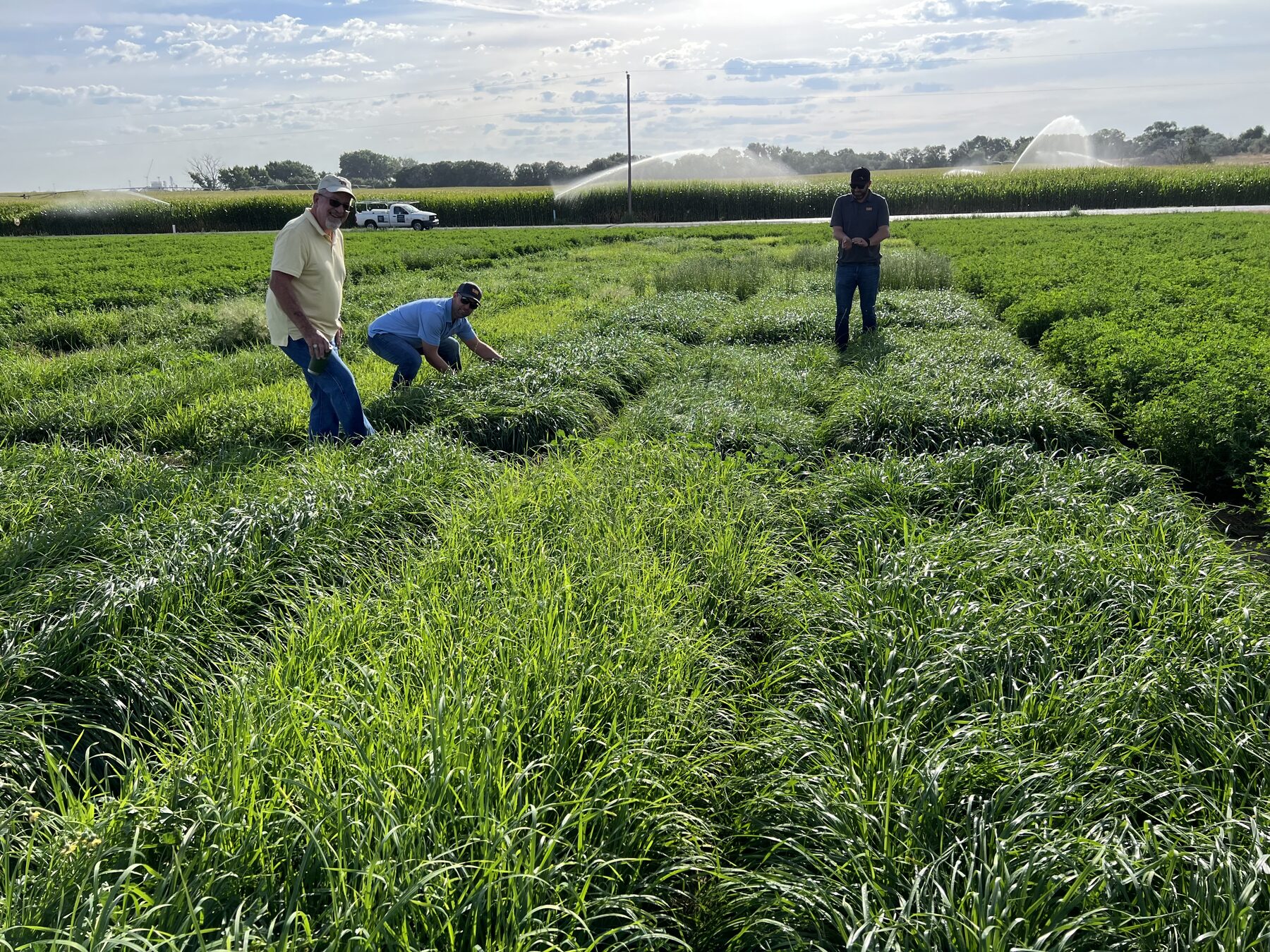
Replicated forage plots only mean something if somebody is standing in them through the season, cut after cut.

Stand density, regrowth after cutting, palatability, winter survival — those are judgments made on foot, in the plot, by the same people who will be recommending a mix for your ground.

Three people evaluating replicated grass plots under running irrigation on a summer afternoon

Get the Western Grass product guide

Mix components, seeding rates and placement — sent by your Western Hybrids rep.